Losing one or more teeth affects much more than the appearance of the smile. It can also change the way you chew, alter your pronunciation, generate insecurity when speaking or smiling and, over time, compromise the functional balance of the entire mouth. Therefore, when the time comes to choose a treatment to replace missing teeth, many people wonder which alternative offers the best results in the medium and long term.
In this context, two of the most popular options are dental implants. dental implants and removable prostheses. Although both can play an important role in oral rehabilitation, they do not offer the same experience, the same level of stability or the same behavior in daily life. The right decision depends on the diagnosis, overall oral health and expectations of each patient.
At Olivo Odontología, oral rehabilitation is approached with a comprehensive and personalized approach, valuing not only dental absence but also function, aesthetics and patient comfort. In addition, their site highlights implants and other restorative treatments within a warm and specialized care model, useful for those seeking dental services in Envigado with a complete assessment before deciding.
What is the difference between a dental implant and a removable prosthesis?
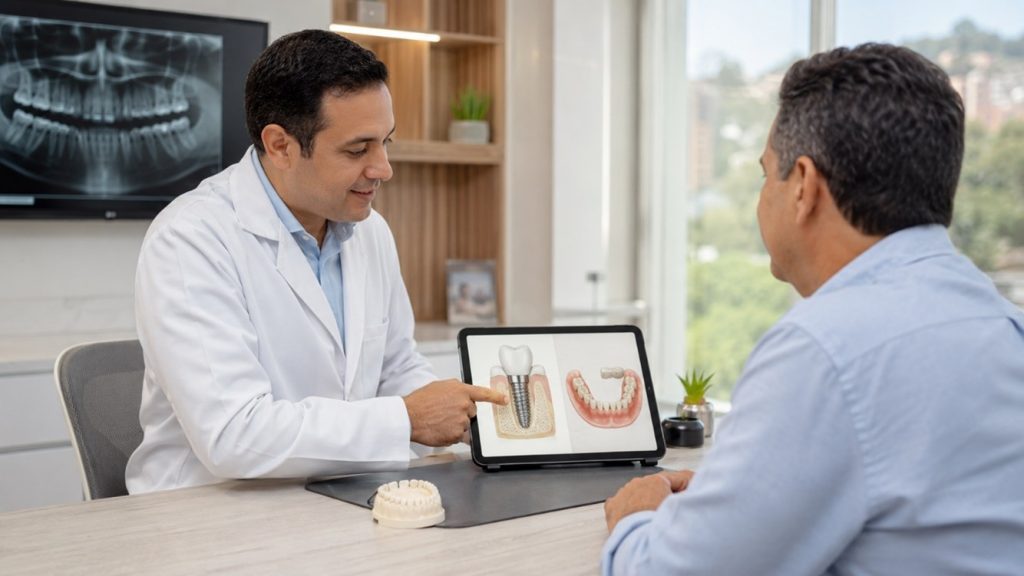
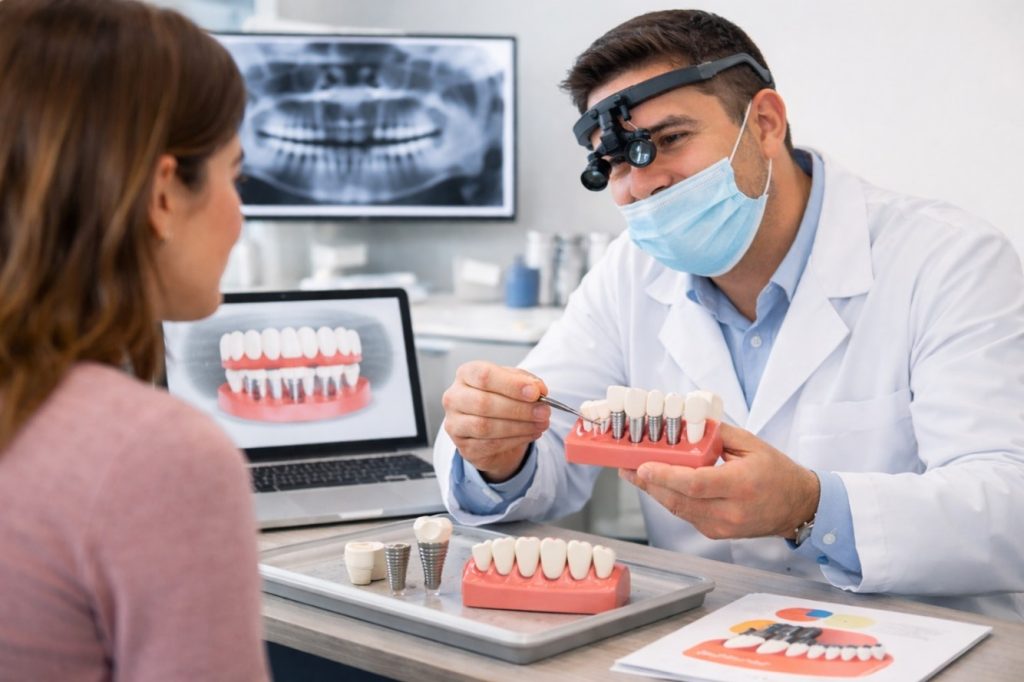
Although both treatments seek to replace missing teeth, they function very differently. A dental implant is a structure that is placed in the bone to serve as a base for a crown or other fixed restoration. In contrast, a removable prosthesis rests on the gum and, in some cases, on natural teeth to replace one or more teeth, but can be removed for cleaning and rest.
This structural difference completely changes the feel of the treatment. While the implant seeks to integrate into the normal functioning of the mouth with a stable restoration, the removable prosthesis usually involves a greater adaptation process. It can be a valid solution in many cases, but it does not necessarily provide the same feeling of security when speaking, eating or smiling.
It also changes the way treatment is planned. Implants require evaluation of the patient’s bone, bite and general health. Therefore, before placing them, the right thing to do is to confirm if the person is suitable and what care should be taken before and after the procedure.
Advantage 1: greater stability when eating and speaking
One of the most valued advantages of dental implants is their functional stability. functional stability. For many patients, the most important point of comparison is not in the visual but in how they feel when using the treatment in their daily routine. Being able to eat with more confidence, speak without fear of something moving and smile without insecurity makes a real difference in quality of life.
Removable prostheses can solve the dental absence, but in some patients they generate a sensation of movement, friction or less firmness, especially at the beginning or when the oral anatomy makes adjustment difficult. Therefore, they require adaptation, controls and a different handling routine.
Implants, on the other hand, tend to offer an experience closer to that of a natural restored tooth, precisely because they do not rely on adhesives or nightly removal. This practical difference weighs heavily in the decision of many patients who seek comfort and security on a day-to-day basis.
Advantage 2: convenience in daily life
When it comes to real benefits, convenience takes center stage. Many people do not want a treatment that only looks good in the office, but an option that is easy to integrate into their daily lives. This is where implants often stand out because, once the clinical phase is completed and the indicated care is followed, they function as a fixed restoration and not as an element that needs to be constantly removed.
This can simplify daily routines such as eating out, traveling, attending meetings or speaking for long periods of time. For patients who have had uncomfortable experiences with removable appliances, the ability to have a more stable mouth feel represents a major change in both safety and comfort.
This does not mean that removable prostheses are useless. In many cases they are a useful alternative, especially when the clinical, anatomical or economic context so indicates. However, when the patient is a good candidate, implants can offer a more comfortable and natural experience over time.
Advantage 3: better aesthetic integration and smiling confidence
Another important point is the natural appearance. A well-planned implant treatment can be better integrated into the smile, gum contour and facial proportion. This is not only important for vanity, but also because the smile influences personal confidence, social interaction and the perception of well-being.
When teeth are missing, the face can also be affected. In some cases, prolonged tooth loss changes the support of certain areas and makes the expression look older. Therefore, replacing missing teeth in a stable manner can contribute not only to function, but also to a more harmonious appearance.
In oral rehabilitation, esthetics should not be separated from function. A good result is not just “that it looks pretty”, but that it looks natural because it is well planned. That is an important difference between a temporary solution and a treatment designed to last and look good as a whole.
Advantage 4: a solution closer to comprehensive rehabilitation
Implants often fit best within comprehensive oral rehabilitation plans. comprehensive oral rehabilitation when the goal is to restore function, esthetics and balance in patients with one or more missing teeth. This is especially valuable when the goal is not just to fill a space, but to restore a stable bite and more complete oral dynamics.
Under that logic, implants are often an important tool within broader treatments, especially if the patient needs a fixed solution that integrates better with crowns, other restorations or complementary procedures.
In addition, today there are more clinical resources to plan personalized treatments, even in patients who require a more detailed assessment of the bone or supporting tissues. This makes it possible to analyze each case with greater precision and define a more convenient option according to the patient’s real needs.
When a removable prosthesis can still be a good option
Talking about the real advantages of implants does not imply presenting removable prostheses as a bad alternative. This would be a mistake. In dentistry, there is no universal treatment for everyone. There are patients who, due to bone conditions, medical history, personal priorities or budget, may benefit more from a well-indicated and well-controlled removable prosthesis.
There are also cases in which the removable prosthesis functions as a transitional solution or as part of a staged planning. Its clinical utility remains important, and in certain scenarios it can satisfactorily address the patient’s need.
The key is not to choose based on impulse or advertising. The correct thing to do is to evaluate advantages, limitations, patient habits, esthetic expectations, type of tooth loss and clinical feasibility. An adequate treatment is not the most striking, but the one that is most coherent with the case.
How to know which treatment is best for you
The best way to decide between dental implants and removable prostheses is through a complete professional assessment. It is not enough to know that a tooth is missing or that a prosthesis seems more economical at first. It is necessary to review the patient’s bite, gums, bone, habits, history and objectives to know which option offers a better prognosis.
If the patient is looking for stability, comfort, better esthetic integration and a fixed solution within an oral rehabilitation plan, implants often offer significant advantages over removable prostheses. But these advantages should only be analyzed within a serious and personalized diagnosis.
In a clinic like Olivo Odontología, the previous evaluation allows us to define if the best way is a removable prosthesis, an implant or a combination of restorative treatments. If you want to know which option best suits your case, you can contact us and request a professional evaluation.